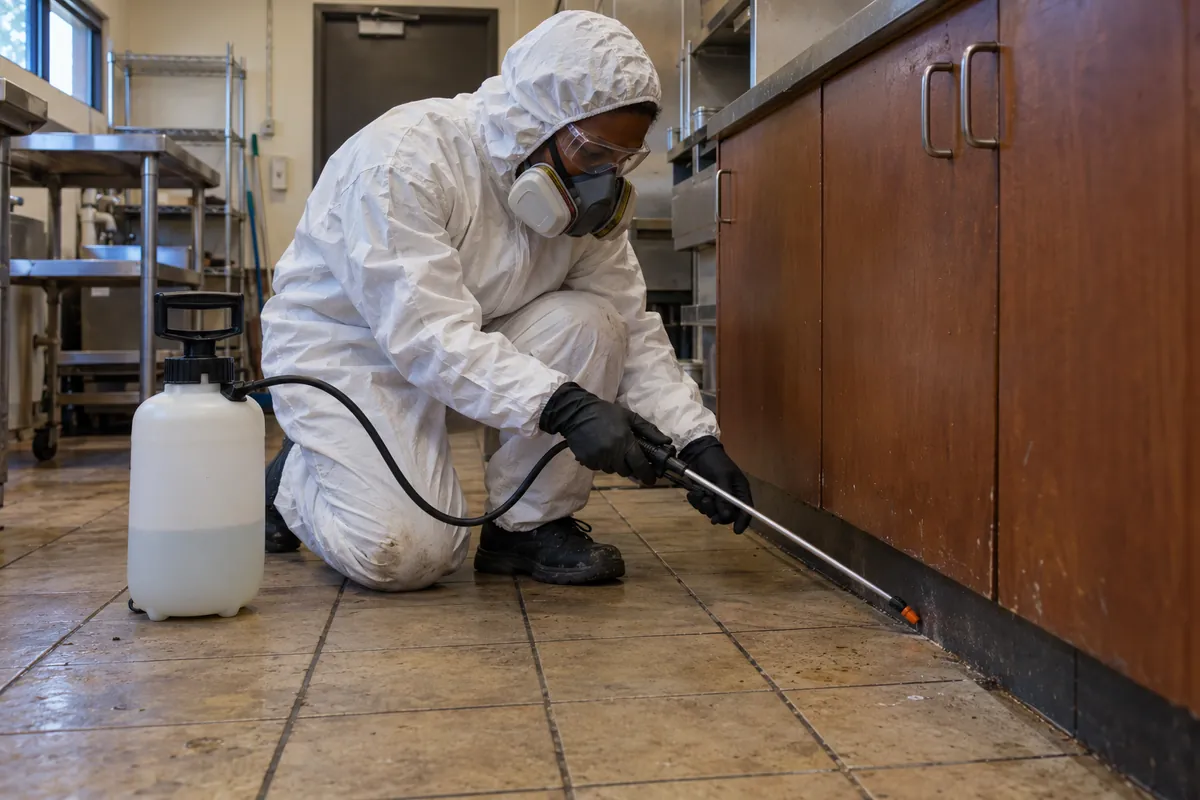
Rats and mice are kept out of restaurants, warehouses, offices, apartments and retail spaces in Clearwater, FL through commercial rodent control built on monitoring, exclusion and documentation. Describe the building through Call Now and our team serving 13 ZIP codes around Clearwater will answer.
A commercial rodent program
- Sanitation and waste management recommendations
- Exclusion of doors, docks, vents and utility penetrations
- Initial inspection and a map of stations and traps
- Tamper-resistant stations outdoors and snap traps indoors
- Regular visits with a logbook of captures and findings
Audits and documentation
Expect service reports and trap maps to be requested in health and food-safety audits. A visit report covering findings, actions taken and recommendations should come from us every time.
Dock doors, dumpsters and utilities
Rodents usually come in by way of loading docks, roll-up doors, dumpsters and utility chases. Sound door seals, dock shelters, closed dumpster lids and sealed conduits stop them before they get to inventory.
- Which rodent do you think I have and what evidence points to it?
- How many visits are planned and what happens if activity continues?
- Is cleanup of droppings and insulation part of the scope or separate?
- Do you show me photos of what you found and what you sealed?
- Where did they get in, and which entry points will you seal?
How commercial rodent control works from inspection to follow-up
Rodent work is a sequence, and the order matters. Trapping without sealing only replaces the animals you remove. Sealing without trapping can lock a rodent inside the walls. A sound visit does these in order.
- Inspection of the roofline, attic, soffits, vents, foundation, garage, crawl space and utility entries, looking for gnaw marks, rub marks, droppings, nests and runways.
- Identification of the species, because roof rats, Norway rats and house mice travel, nest and take bait differently.
- Trapping or baiting plan: snap traps placed on the travel lines, with tamper-resistant stations outside where rules allow.
- Exclusion: gaps larger than a quarter inch sealed with hardware cloth, steel wool, copper mesh, sheet metal or sealant, and vents and weep holes screened.
- Cleanup and repair recommendations for droppings, contaminated insulation and chewed wiring.
- Follow-up visits to remove traps, check the seals and confirm activity has stopped.
Common mistakes with rats and mice
- Using poison alone indoors. Poisoned rodents can die in walls, and bait does not close the entry points.
- Ignoring the roof and trees. Roof rats use branches, fences and power lines to reach attics.
- Sealing before checking that all animals are out of the structure.
- Skipping cleanup. Remaining droppings and urine can draw new rodents.
- Setting a few traps in one place. Rodents follow edges and walls, and traps need to sit on those routes.
Safety: droppings, nests, pets and children
Rodent droppings, urine and nesting material can carry germs and should be cleaned with care. The CDC and EPA advise ventilating the area, wearing gloves and a respirator rated for the job, wetting droppings with a disinfectant before wiping, and never sweeping or vacuuming them dry.
Work areas should be off limits to pets and children. Where bait is used at all, it goes in tamper-resistant stations that pets, wildlife and children cannot get to, and some states restrict certain rodenticides, which leaves exclusion and trapping to do most of the work there.
Prepare your Clearwater home for rodent work
- Clear access to the attic hatch, garage, crawl space and under-sink cabinets
- Tell our technician about pets, children and any health condition before treatment
- Keep trash can lids on and move bins away from the house wall
- Store pet food and bird seed in sealed metal or hard plastic containers
- Write down where you heard noises, found droppings or saw gnawing, and at what time of day
What changes the size of a rodent job
A single mouse in a kitchen and a roof rat colony in a two-story attic are different jobs. The written scope should show what our team found and what each part of the work will do.
- Number and size of entry points, including roof tiles, vents, rooflines, garage door seals and utility chases
- The species and how long the activity has been going on
- Whether the home sits next to open space, citrus or palm trees, creeks, farms or older sheds
- Whether you want inspection and trapping only, or exclusion and cleanup as well
- Attic and crawl space access, and whether insulation is contaminated
Rodent cheat sheet
| Rodent | Body and tail | Droppings | Nest and entry |
|---|---|---|---|
| Deer mouse | Slightly larger, white belly, bicolored tail | Similar to house mouse | Sheds, garages and boxes; handle droppings with care |
| Roof rat | 6 to 8 inches, tail longer than body | 1/2 inch, spindle shaped | Attics and trees, rooflines and vents |
| House mouse | About 3 inches of body, tail as long as the body | 1/4 inch, rod shaped | Wall voids and insulation, gaps near a quarter inch |
| Norway rat | 7 to 9 inches, tail shorter than body | 3/4 inch, capsule shaped | Burrows at foundations, basements, drains |
| Pack rat (woodrat) | Larger, furry tail, large ears | Larger, dark, often in piles | Stick middens in garages, sheds, engine bays |
What makes commercial rodent control different in Clearwater
Gulf Coast city in Pinellas County with Clearwater Beach, canals, and the Intracoastal Waterway. Roof rats are very common in Florida palms and attics; Norway rats favor areas near water and restaurants.
High humidity keeps rodents active year-round; hurricane season runs June to November. Housing: mid-century concrete-block homes, newer coastal construction, condos, and vacation rentals. Put the question to us: how do these local conditions affect where rodents nest, move and get in at your address?
Commercial rodent control across Clearwater and nearby cities
In Clearwater, Florida, Rodent Control Clearwater serves 13 ZIP codes: 33755, 33756, 33757, 33758, 33759, 33760, 33761, 33762, 33763, 33764. We also serve Largo, Dunedin, Safety Harbor, Palm Harbor and Seminole. Because each address is checked on its own, give your ZIP code when you call.
Use Call Now at the top of the page and describe the noises, droppings or damage you found. You will reach our team, which checks the address, inspects the roofline and attic and gives you the scope in writing.
Related help in Clearwater
If this is not quite your situation, these pages cover the neighboring questions: Attic Rodent Cleanup; How to Choose a Rodent Control Company; Rodent Proofing; How to Rodent-Proof Your Home This Weekend. The service area list shows every nearby city and ZIP code covered.
Commercial Rodent Control in Clearwater: common questions
What is the most common entry for rodents in a business?
Worn door seals, docks, places where utilities pass through, and roof or wall vents are the common ones.
What if a customer reports a rodent?
Document the sighting, notify our team and request a service visit.
How often does a business need rodent monitoring?
Monthly service is common, and food businesses may need more. Our technician adjusts based on findings.
Who is responsible for repairs?
That is set by the lease, which assigns it to the owner or the tenant; our technician recommends the sealing and may perform it.
Are bait stations required?
Outdoors they are common, though what is used and where it goes depends on the building and the local rules.
Do I need a written plan?
Yes, a written plan with a service schedule and an incident procedure.
Continue with the next useful question